
Selective Licensing
A landlord's guide
Selective Licensing
A landlord's guide
What is Selective Licensing?
Selective licensing is a scheme introduced by local councils that requires landlords to obtain a licence for each rental property in designated areas. The aim is to:
Improve housing standards
Tackle poor property conditions
Ensure landlords are managing properties properly
Improve local communities
If your property falls within a licensing area, you must apply for a licence to legally let it.


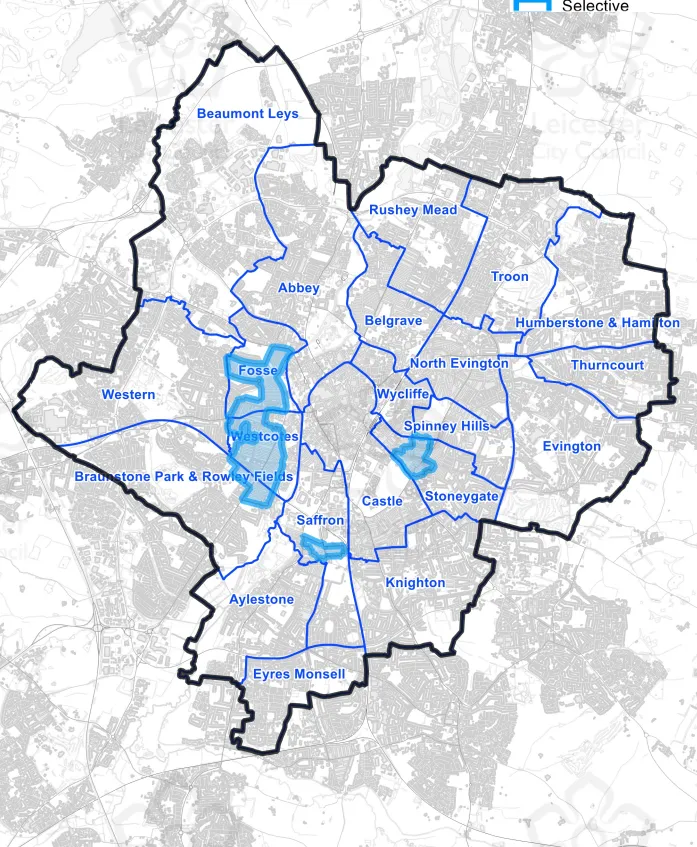
Selective Licensing in Leicester City
Leicester City Council introduced its scheme in October 2022, covering several areas
Key Details
Westcotes, Fosse, Braunstone Park & Rowley Fields, Stoneygate & Saffron
Licence required for each rental property in designated areas
Scheme runs until October 2027
Cost: around £1,290 per property
Includes inspections and “fit and proper person” checks
Selective Licensing in Oadby & Wigston
Oadby & Wigston Borough Council is introducing a new selective licensing scheme from November 2025, covering parts of Wigston and South Wigston
Key Details
Started 10 November 2025
Applies to privately rented homes in designated streets
Licence duration: typically 5 years
Cost: around £850 (discounts available)
-webp_format.webp)
What Happens if You Don’t Comply?
Failing to obtain a licence can result in:
Fines of up to £30,000
Rent Repayment Orders (repaying tenants up to 12–24 months’ rent)
Inability to legally serve notice in some cases
In short—being unlicensed puts your entire tenancy at risk
Common Mistakes Landlords Make
Not realising their property is in a licensing area
Delaying the application
Missing key documents
Assuming their agent is handling it (when they’re not)

How We Help Landlords Stay Compliant
At Knightsbridge, we work with landlords across Leicester, Oadby, and Wigston to make sure everything is handled properly.
Check
if your property requires a licence
Manage
the full application process
Prepare
required documents
Liaise
with the council
Selective licensing is here—and it’s expanding.
If you’re unsure whether your property is affected, or you want to make sure everything is in order, it’s always better to check early rather than deal with issues later.