Does a Better EPC Rating Mean a Higher Selling Price?
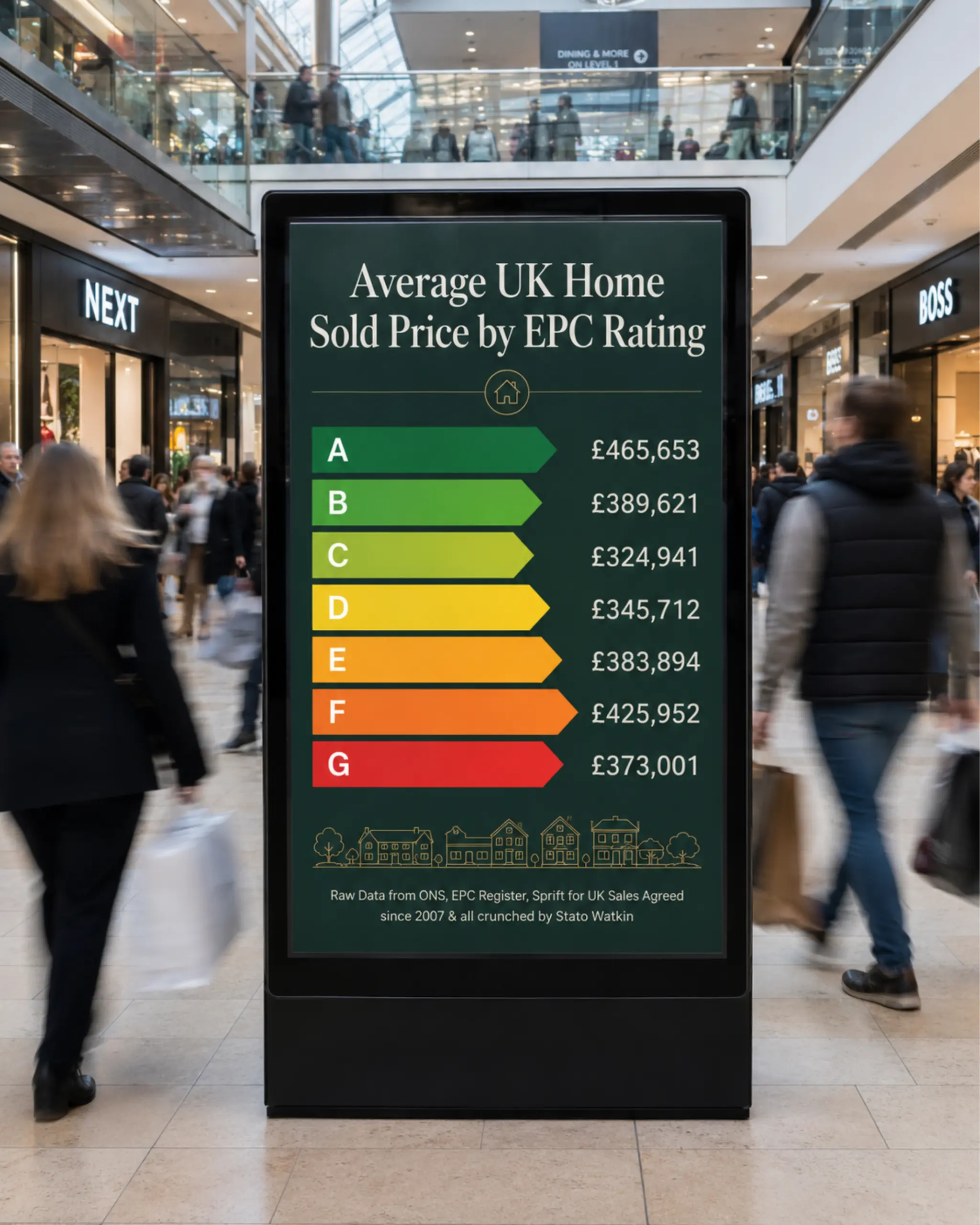
Does a Better EPC Rating Mean a Higher Selling Price?
At first glance, the figures appear to suggest a simple conclusion. The more energy efficient the home, the higher the selling price.
Looking at all the millions of homes sales since 2007 in the UK, homes with an Energy Performance Certificate (EPC) rating of A (the highest rating) achieved the highest average sale price at £465,653, while properties rated C averaged £324,941. However, the story becomes far more interesting when you move further down the scale. Homes rated F averaged £425,952, considerably more than those with far better energy ratings.
The reason is that an EPC rating is only one characteristic of a property. It does not tell us its size, location, architectural style, age or desirability.
Many A rated homes are newly built and may benefit from what is commonly called the ‘new build premium’ (Homes are like cars, you pay on average around 10% more because its brand new) yet they have modern heating systems, better insulation and are constructed to more recent energy-efficiency standards.
At the opposite end, some of Britain’s largest and most valuable homes are Victorian, Georgian or even older. These properties may have solid walls, large rooms, high ceilings and traditional heating systems, resulting in a lower EPC rating. Yet their location, character, size and scarcity can make them extremely valuable.
Therefore, the figures do not prove that improving an EPC rating will automatically add a specific amount to a property’s value. They simply offer an interesting snapshot of the homes that have sold within each category.
For Leicester homeowners, an EPC rating is worth understanding, but it remains only one part of the much bigger property value picture.