How 25 to 34 years old live in the UK
The way people aged 25 to 34 live in the UK has changed over the past twenty years, but not quite in the way many headlines suggest.
There’s a widely held view that homeownership among this age group has fallen dramatically. In reality, while there has been a drop, it’s not as steep as people often assume.
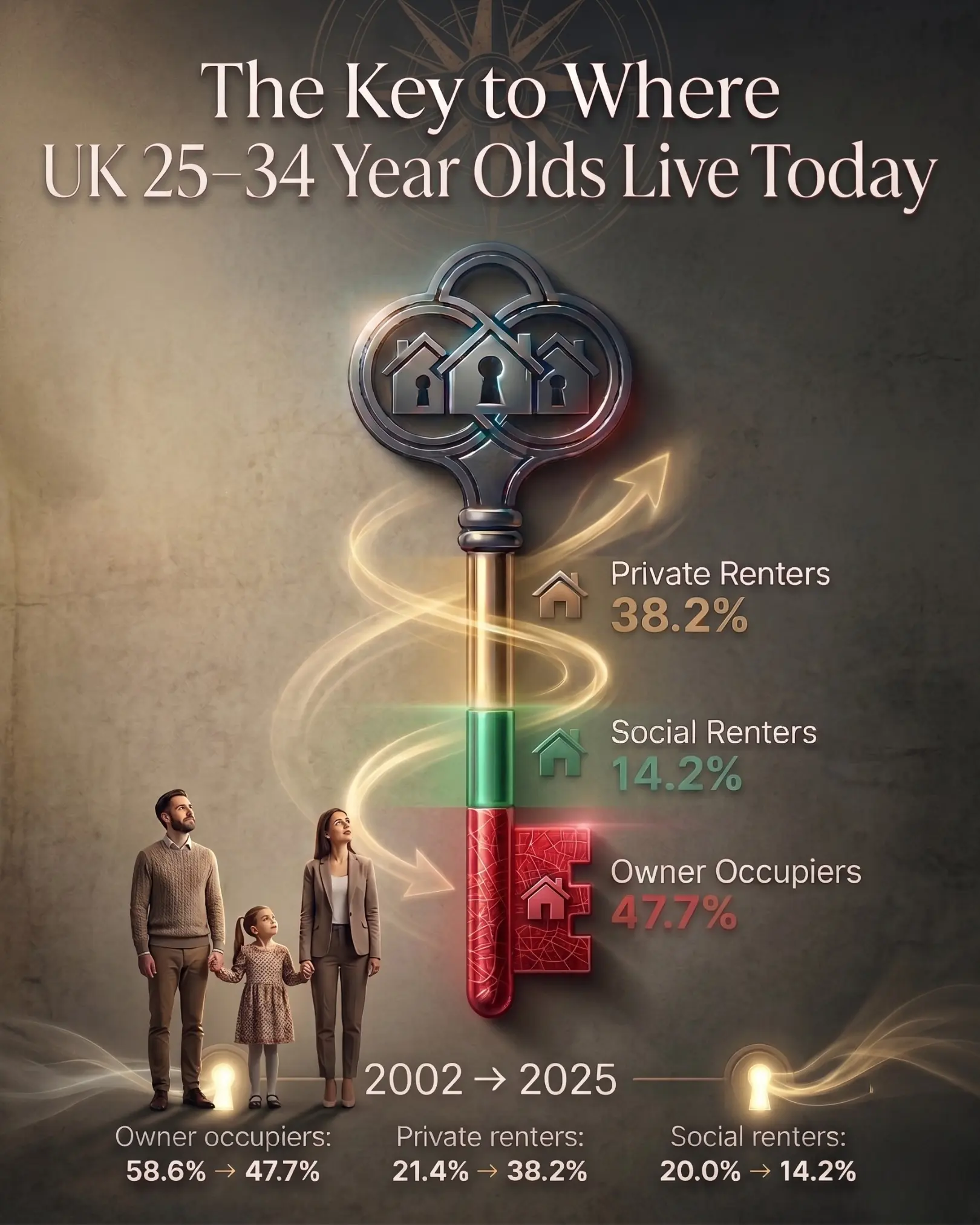
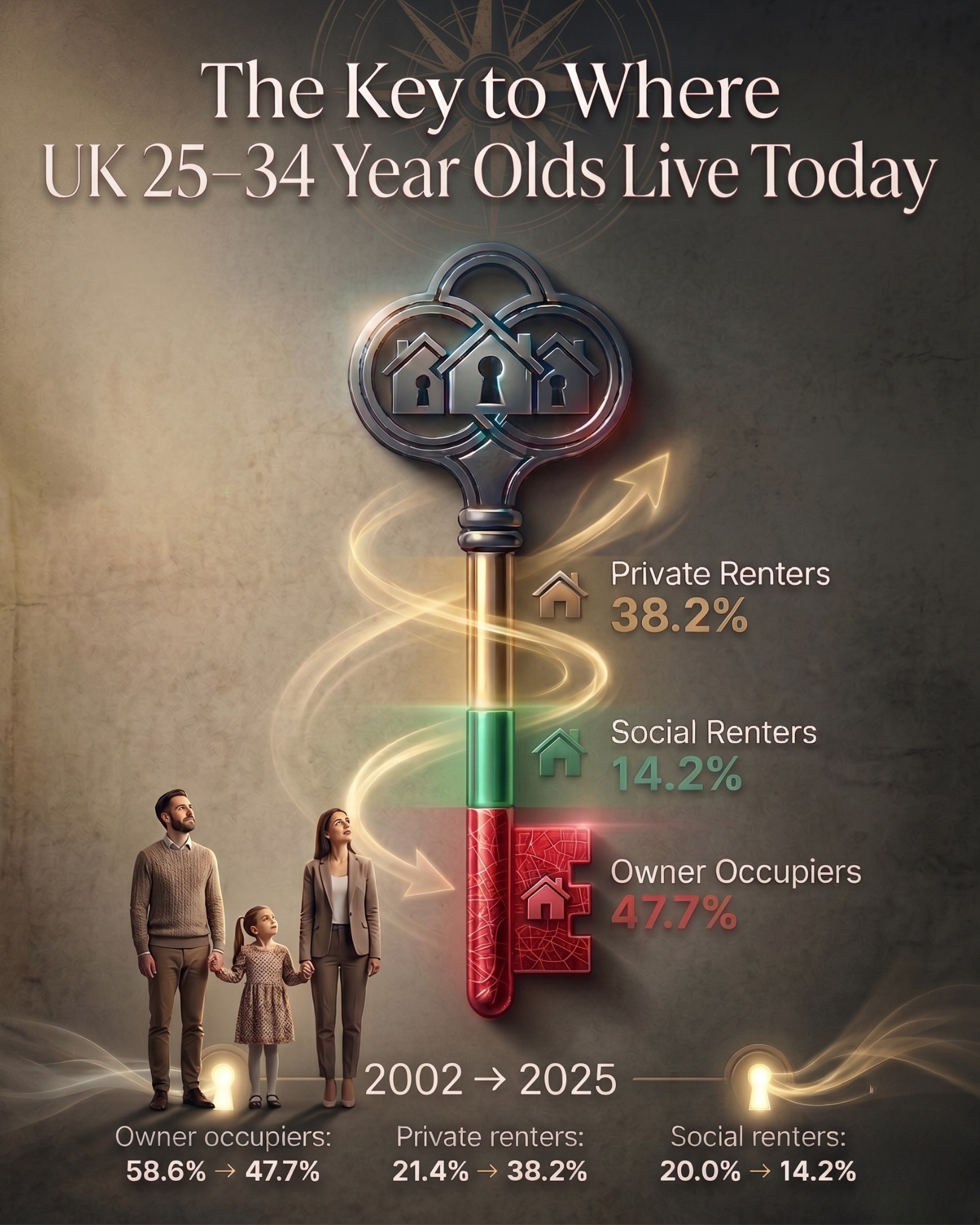
In 2002, 58.6% of 25 to 34-year-olds owned their own home. Today, that figure sits at 47.7%. It’s a noticeable shift, but far from a collapse. Nearly half of people in this age bracket are still homeowners.
The more significant change has happened elsewhere.
Private renting has seen a sharp rise over the same period. Back in 2002, 21.4% of this group were renting privately. Today, that number has climbed to 38.2%. That’s where the real shift lies.
Meanwhile, social renting has declined, falling from 20.0% to 14.2%. So this isn’t a simple case of people moving from ownership into social housing. Instead, there’s been a clear move towards private renting as the main alternative.
So, what does this actually tell us?
It points to a change in timing rather than a complete change in direction. Fewer people are buying in their late twenties and early thirties, but many aren’t shut out altogether. They’re just taking longer to get there.
A lot of this comes down to the challenges we’ve seen over the past two decades. Stricter mortgage criteria, larger deposit requirements, and rising house prices have all made it harder to buy early. The result is more people renting for longer before eventually stepping onto the property ladder.
In that sense, this isn’t a generation that can’t buy. It’s a generation that buys later.
And that difference matters.
It influences how the property market behaves. It keeps demand in the rental sector high, pushes first-time buyer activity further down the line, and shifts purchasing power into older age groups.
We’re seeing these trends play out locally as well. Here in Leicester, the balance between renters and buyers continues to shift, reflecting what’s happening nationally.
What stands out most to you from these changes?